
Water Damage Restoration Lansing MI
NOAA radar recorded 550 hail signatures within about 15 miles of the local center between 2021-2025 (2021: 157, 2022: 98, 2023: 138, 2024: 93, 2025: 64). The heaviest recent hail year locally was 2021, with 157 radar hail signatures inside a 15-mile radius, leaving roof punctures that allow rainwater into attics and living rooms. Our crews deploy industrial extractors and desiccant dehumidifiers to dry your property before secondary structural rot sets in.
Phone (517) 555-0158 when you find it.
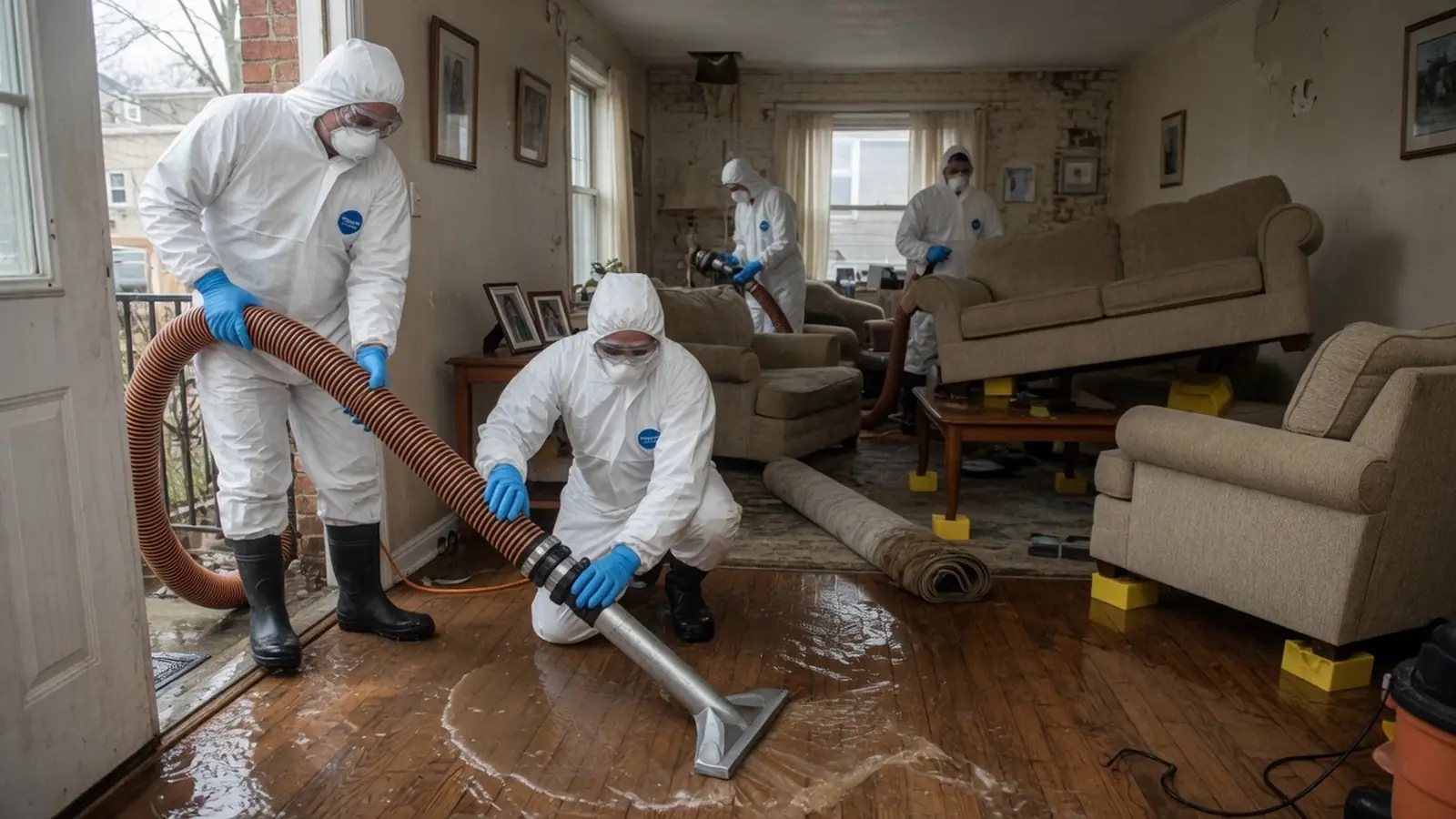
Restoring Regional Homes After Water Disasters
About 50% of housing units across our area (27,766 of 55,082) were built before 1960, the era of galvanized steel supply lines and cast iron drains that now deteriorate.
About 15% of housing units locally (8,131 of 55,082) were built in the 1960s, overlapping the years aluminium branch wiring was installed and demanding stringent electrical safety protocols during flood recovery.
About 24% of housing units regionally (13,042 of 55,082) were built in the 1970s and 1980s, overlapping the years polybutylene supply piping was commonly installed and subject to brittle failure.
About 89% of housing units in the district (48,939 of 55,082) were built before 1980, the period when asbestos-containing materials and lead paint were still in use, requiring containment barriers during teardowns.
Homeowners often describe the confusion of dealing with sudden basement water intrusion, seeking urgent guidance on whether to bring in an emergency plumber, an extraction company, or a waterproofing contractor.
Our certified technicians specialize in resolving sudden basement flooding from storm runoff before moisture ruins finished living areas.
We deploy thermal cameras and HEPA air scrubbers across older neighborhoods near Old Town and the Eastside to verify complete moisture extraction before any drywall rebuild begins.
Our Four-Stage Mitigation Workflow
Ground saturation directly drives foundation seepage because the dominant mapped soils in the surrounding county (MI065) by acreage are Conover loam, 0 to 4 percent slopes; Colwood-Brookston loams; Marlette fine sandy loam, 2 to 6 percent slopes; Aubbeenaubbee-Capac sandy loams, 0 to 3 percent slopes. The single most extensive soil unit mapped around the area is Conover loam, 0 to 4 percent slopes, covering about 56,413 acres of MI065, which holds moisture tightly against below-grade foundations. A pattern echoed in public discussions is recurring water infiltration in older Michigan basements, where homeowners explore whether grading, sump systems, or interior drainage tile will halt hydrostatic seepage.
- Thermal Moisture Inspection. We scan flooring, baseboards, and wall assemblies with calibrated infrared sensors to trace the entire migration path of intruding moisture.
- Heavy Water Extraction. Truck-mounted vacuum units pull bulk standing water from carpets, subflooring, and concrete slabs to halt capillary wick action.
- Structural Dehumidification. Industrial air movers and LGR dehumidifiers pull trapped moisture from framing timbers, addressing crawl space floor joists before humidity triggers rot.
- Antimicrobial Treatment. Every restoration finishes with hospital-grade botanical sanitizers, following proven protocols for safe containment and microbial spore removal.
Honest Diagnostics And Proven Drying
We provide comprehensive moisture mapping and direct documentation for insurance adjusters, preventing structural ruin from winter burst pipes without speculative shortcuts or exaggerated claims.
Emergency Water Extraction
Rapid extraction prevents deep subfloor saturation and drywall degradation. High-capacity pumps remove pooling water from finished basements and ground-level living spaces immediately.
Structural Framing Drying
Targeted air drying protects wood framing, sill plates, and subfloors from warping. We balance relative humidity and temperature to extract bound moisture safely.
Sewage And Biohazard Cleanup
Black water intrusions require immediate containment and biological sanitization. We remove porous contaminated items and treat structural surfaces with hospital-grade antimicrobials.
Our Commitment To Rapid Moisture Control
When plumbing failures or storm runoff compromise a building, swift action prevents catastrophic wood rot and mold colonization. We operate responsive extraction equipment, adhere strictly to ANSI/IICRC S500 drying standards, and maintain transparent communication with homeowners throughout the mitigation process.
- 12Zip Codes Served
- 8Service Areas
- 3Services Offered
Read genuine experiences from regional property owners who relied on our rapid response crews for emergency water extraction, moisture mapping, and structural drying.
“Our closing date was only five days away when a supply line split under the kitchen sink and soaked the subfloor. The crew arrived within forty minutes, set up containment barriers, and ran desiccant equipment continuously so our buyer inspection passed without a single hitch. They handed us full moisture log documentation right on time.”
Marcus B.
“Pulling up waterlogged carpeting revealed hidden black rot and cracked subfloor panels that went far beyond the original leak. Instead of panicking or stalling, the team showed me the structural damage on their thermal cameras and adjusted the drying plan immediately without making a fuss. They had the framing completely sanitized and stabilized ahead of schedule.”
Elena R.
“An earlier repair service left saturated insulation inside our drywall cavities and simply pointed a single household box fan at the studs. This company brought proper moisture meters, stripped out the hidden damp insulation their competitor had missed, and eliminated the sour mildew smell within two days. The crew truly rescued our home from a developing disaster.”
Devin T.
“Every single mitigation fee was itemized on paper before any extraction equipment was turned on in our basement. The team worked directly with our insurance adjuster and stuck precisely to their initial quote without any sudden surprise surcharges or hidden fees. Having that financial clarity during an emergency was an enormous relief.”
Clara K.
Frequently Asked Questions
How quickly should water mitigation begin after indoor flooding?
Professional water mitigation should begin within 24 to 48 hours to prevent irreversible wood rot and hazardous microbial mold colonization. Rapid extraction removes standing saturation before porous building materials suffer secondary structural degradation.
How long does the structural drying process typically take?
Thorough structural drying typically requires three to five days depending on water volume, ambient temperature, and material saturation depth. Daily monitoring with penetrating moisture meters and thermal imaging confirms framing reaches baseline dry standard before equipment removal.
Does homeowners insurance cover emergency water damage restoration?
Most standard homeowner policies cover sudden and accidental water discharges like ruptured pipes, while gradual leaks are typically excluded. We document moisture readings and photograph all affected areas to provide detailed proof for your insurance claims adjuster.
Can waterlogged drywall and carpeting be saved?
Clean water losses often permit saving carpet if extracted rapidly, but contaminated black water or sagging drywall requires immediate disposal. Structural drywall that loses structural integrity or harbors trapped moisture behind insulation must be flood-cut and replaced.
What causes recurring moisture seepage in regional basements?
Heavy exterior soil saturation creates hydrostatic pressure against foundation walls, forcing groundwater through mortar joints and floor cracks. Resolving recurring moisture requires combining perimeter drainage, sump basin installation, and controlled interior dehumidification.